CJS Group - Your E-Waste Partner
E-Waste Management: Smart Solutions for a Greener Future

The proper recycling of e-waste is crucial for several reasons, encompassing environmental protection, resource conservation, and human health.
What is E-Waste And What Do We Do?
At CJS, we are dedicated to providing comprehensive e-waste recycling and management solutions that not only support the responsible disposal of electronic waste but also promote environmental stewardship for a sustainable future.
We Provide the following services:
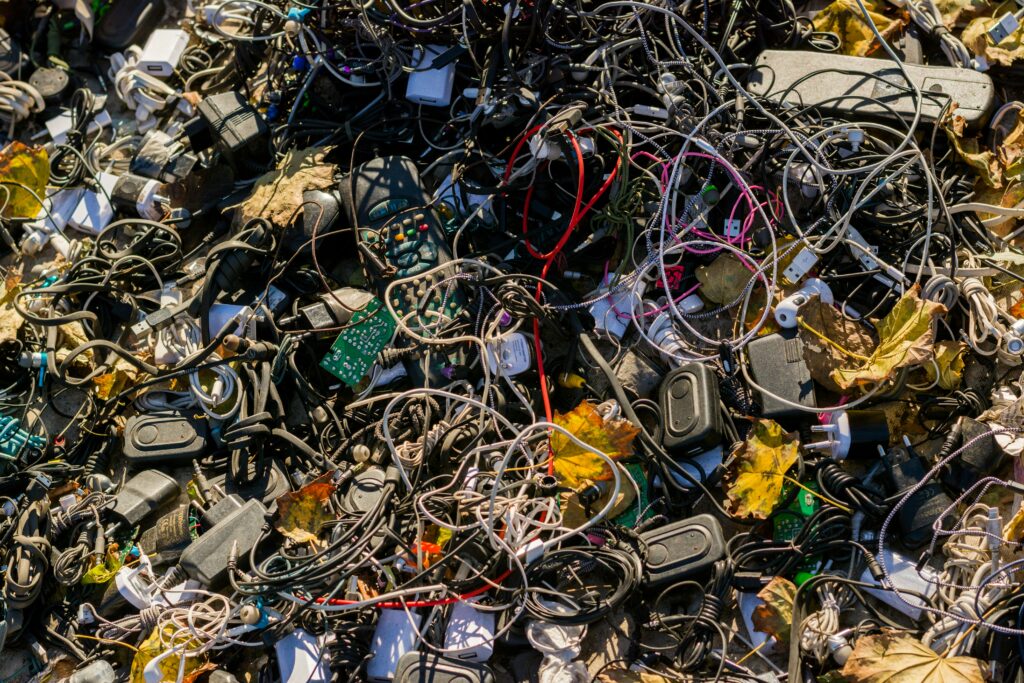
The recycling of e-waste is a complex process that involves dismantling, sorting, and processing electronic devices to recover valuable materials and safely dispose of hazardous components.
- Comprehensive E-Waste Recycling Including Collection of Provided E-Waste
- Full Data Destruction Services
- On Site services wich include crushing, Drilling and sanitization of HDDs
- Drop off and Collection Services of E-Waste
E-Waste Recycling Processes
1. Collection and Sorting


2. Dismantling and Pre-processing
3. Mechanical Processing


4. Material Separation
6. Refining and Purification


7. Proper Disposal of Hazardous Waste and Distribution of Separate Materials
Defining E-Waste and its Composition
E-waste encompasses a wide array of discarded electrical and electronic equipment, ranging from large household appliances like refrigerators and washing machines to smaller devices such as computers, mobile phones, televisions, and electronic toys. Essentially, any electronic product that has reached its end-of-life or is deemed obsolete falls under the umbrella of e-waste.
The composition of e-waste is incredibly diverse and complex, varying significantly based on the type of device and its manufacturing date. However, some common materials consistently appear across different e-waste categories.
Common materials found in general E-Waste
- Metals - gold, silver, platinum, copper, aluminum, iron, and tin.
- Plastics - PVC, ABS, polystyrene, and polycarbonate
- Glass and Other Materials - mercury, cadmium, and lead
Data Destruction
Safeguarding Your Digital Legacy in a World of Everlasting Information
The Imperative of Impeccable Data Destruction: A CJS Perspective
In today’s hyper-connected digital landscape, data is the lifeblood of any organization. However, data’s lifecycle doesn’t end with its active use. When hardware reaches its end-of-life, or when sensitive information becomes obsolete, the secure and irreversible destruction of that data becomes paramount. Here at CJS, we understand that data security extends beyond protection during active use; it encompasses the complete and verifiable elimination of data to mitigate the risks associated with data breaches and non-compliance.
Understanding Data Destruction
Data destruction goes far beyond simply deleting files or formatting a hard drive. These methods often leave data remnants that can be recovered using readily available tools. True data destruction entails rendering data completely unreadable and unrecoverable, ensuring it can never be accessed or reconstructed by unauthorized parties.
Why is this so critical? Consider the potential consequences of inadequate data destruction
- Data Breaches: Recoverable data on discarded devices can be a goldmine for malicious actors, exposing sensitive customer information, financial records, intellectual property, and more.
- Compliance Violations: Regulatory frameworks like GDPR, HIPAA, and CCPA mandate stringent data protection measures, including secure data disposal. Failure to comply can result in hefty fines and reputational damage.
- Reputational Damage: A data breach resulting from improper data destruction can erode customer trust and severely impact an organization’s brand image.
According to the National Environmental Management: Waste Act 2008, it is illegal in South Africa to dispose of electronic waste in landfills. Failure to comply could result in an R10 million fine, jail time, or both.
CJS: Your Partner in Secure Data Destruction
At CJS, we offer comprehensive data destruction services designed to meet the diverse needs of our clients. We employ industry-leading techniques and adhere to the highest security standards to ensure the complete and verifiable elimination of your sensitive data.
Our Approach to Secure Data Destruction:
We provide a multi-faceted approach to data destruction, incorporating the following methods, each carefully selected based on your specific requirements and the nature of the data:
Data Erasure (Data Wiping): This software-based method overwrites existing data with a series of random characters, rendering it unreadable. We utilize specialized software that conforms to recognized international standards like NIST 800-88 and DoD 5220.22-M. Data erasure is a cost-effective solution for drives that are still functional and can be repurposed. We provide detailed reports verifying the successful erasure of each drive, providing a clear audit trail.
Degaussing: This method uses a powerful electromagnetic field to completely erase data from magnetic storage devices like hard drives and tapes. Degaussing renders the media unusable, making it ideal for highly sensitive data or damaged drives. We use certified degaussers that meet stringent performance standards, guaranteeing complete data elimination.
Physical Destruction (Shredding): For the ultimate in data security, we offer physical destruction services. This involves shredding hard drives, SSDs, and other media into tiny particles, ensuring that data is irretrievable. Our industrial-grade shredders are capable of handling a wide range of media types, and we provide certificates of destruction as proof of complete data elimination.
Data Destruction Certificates
In the e-waste industry, the handling and disposal of electronic waste are critical aspects that require strict compliance with regulations and standards. One essential component in this process is data destruction, which involves the secure and irreversible deletion of sensitive information stored in electronic devices. This is where a data destruction certificate from CJS comes into play.
CJS is a leading provider of data destruction services, offering a range of solutions to ensure the secure disposal of electronic waste. A data destruction certificate is a document that verifies that the data destruction process has been carried out in accordance with industry standards and regulations. It provides evidence that the sensitive data stored in electronic devices has been destroyed beyond recovery, protecting the privacy and security of individuals and organizations.